
Texas Instruments Retirement Benefits: A Practical Guide for DFW Employees and Retirees
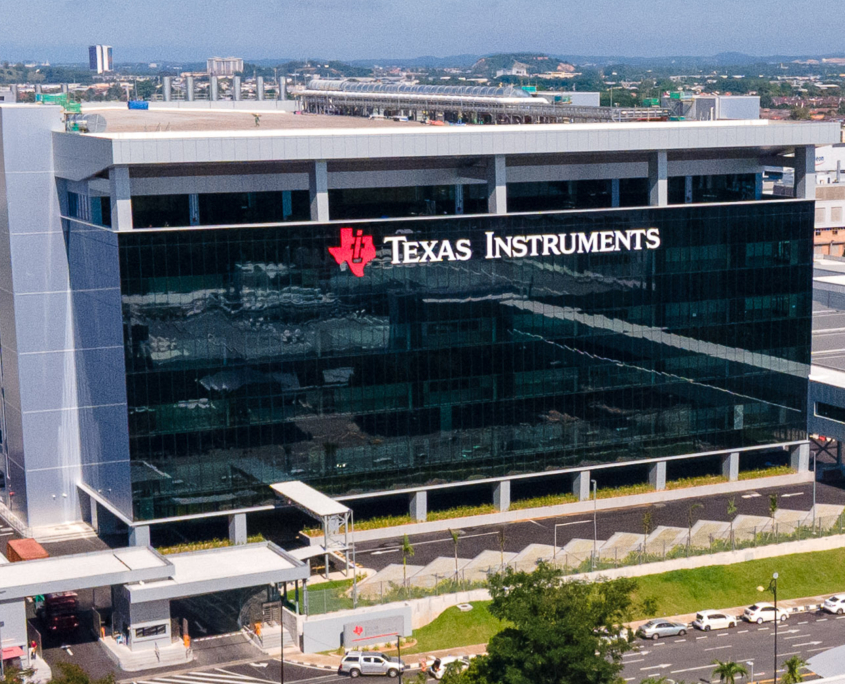
If you work at Texas Instruments or are approaching retirement from the company, your Texas Instruments retirement benefits package is one of the more distinctive in DFW. With Dallas as TI’s global headquarters and major facilities in Sherman, Richardson, and Plano, the company employs thousands of engineers and corporate staff across North Texas. Between an instantly vested 401(k) match, a 2% fixed employer contribution, a profit-sharing program that has historically averaged 7–9% of base pay, a frozen-but-still-paying pension for longer-tenured employees, and a Retiree Reimbursement Account that helps with healthcare in retirement, there’s a lot to coordinate. We work with TI engineers and managers regularly and know where the real planning opportunities tend to show up.
The plan details in this guide are believed to be accurate as of April 2026 based on publicly available plan documents and SEC filings. However, employers can change benefits at any time. Always verify your specific plan details through the TI Benefits Center at Fidelity or your HR representative before making any decisions.
The TI Contribution and 401(k) Savings Plan
TI runs two qualified defined contribution plans: the older TI 401(k) Savings Plan, which is closed to new participants, and the TI Contribution and 401(k) Savings Plan (usually shortened to the C&S Plan), which has been the active plan for new hires since January 1, 1998. Fidelity serves as the recordkeeper through NetBenefits, and Northern Trust holds the assets as trustee. Most employees today participate in the C&S Plan, and the details below reflect that plan.
Employer Contributions: Match, Fixed, and Profit Sharing
TI’s employer-side contributions come in three layers, which is what makes this plan unusually generous compared to typical large-cap employers:
- 4% dollar-for-dollar match: TI matches your contributions dollar for dollar up to 4% of eligible earnings. The match is 100% vested immediately, with no waiting period or graded schedule.
- 2% employer fixed savings contribution: TI deposits 2% of eligible pay into your account regardless of whether you contribute, similar to a non-elective contribution.
- Profit sharing: Each year that TI hits its operating-margin threshold, eligible employees receive a profit-sharing contribution that has historically ranged from 0% to 20% of base salary, with most reported years landing in the 7–9% range. Reaching the maximum 20% requires very strong full-year operating performance and is uncommon.
Combine those three layers and the typical TI employee receives roughly 13–15% of pay from the company in a normal year, on top of their own contributions. In a strong year that figure can climb higher; in a weak operating year it can drop closer to the 6% match-plus-fixed floor. Either way, the profit-sharing piece introduces meaningful variability that engineers approaching retirement should plan around.
What to do: Contribute at least 4% of pay so you capture the full match. The 2% fixed contribution and the profit-sharing payment come regardless of your participation, but the 4% match requires you to put your own money in first.
2026 Contribution Limits
| Limit | 2026 Amount |
|---|---|
| Employee deferral (pre-tax + Roth) | $24,500 |
| Catch-up (age 50–59, 64+) | $8,000 |
| Super catch-up (age 60–63) | $11,250 |
| Overall 415(c) limit (all sources) | $72,000 |
| Compensation limit (401(a)(17)) | $350,000 |
One SECURE 2.0 wrinkle that hits a lot of TI engineers: starting in 2026, if your prior-year FICA wages exceeded $150,000, all catch-up contributions (age 50+ and the 60–63 super catch-up) must go into a Roth account rather than pre-tax. For senior TI staff in peak earning years, that effectively turns catch-up dollars into after-tax-in, tax-free-out money.
Roth vs. Pre-Tax
The C&S Plan accepts both pre-tax and Roth 401(k) contributions, and you’re 100% vested in your own contributions on day one. For higher-earning TI engineers in peak tax bracket years, pre-tax contributions are often the right default: the deduction at 32% or 35% today is generally worth more than tax-free growth if you expect to be in a lower bracket in retirement. Roth still has a role during lower-income years and as a tax-diversification tool. We help clients run this choice year by year rather than setting it once and forgetting.
After-Tax Contributions and the Mega Backdoor Roth
The TI plan permits after-tax (non-Roth) contributions beyond the standard pre-tax/Roth deferral limit, which opens the door to the Mega Backdoor Roth strategy. The mechanics are simple in concept: contribute after-tax dollars on top of your pre-tax/Roth deferrals up to the overall $72,000 415(c) limit, then convert those after-tax balances to Roth as soon as possible to keep earnings minimal. For a high-earning TI engineer who is already maxing the standard $24,500 deferral and receiving the full employer contributions, this can mean tens of thousands of additional Roth dollars per year.
Two practical notes. First, confirm with Fidelity whether the plan currently permits in-plan Roth conversions of after-tax balances, or whether you need to use in-service distributions to a Roth IRA; the mechanics matter for tax efficiency. Second, the after-tax bucket fills up alongside employer contributions, so the more profit sharing TI pays, the less 415(c) room is left for after-tax. The Bogleheads Backdoor Roth explainer is a solid reference.
Investment Options and Plan Lineup
The C&S Plan offers a tiered investment menu: target-date funds, a curated set of index and actively managed funds across the major asset classes, and the TI common stock fund. Fund expenses are generally favorable thanks to plan scale. For most TI employees, the core tier of low-cost index funds is sufficient to build a well-diversified portfolio.
If you’ve accumulated a meaningful position in the TI common stock fund through years of profit-sharing contributions, take a hard look at concentration risk. It’s common for long-tenured engineers to find 20–40% of their retirement assets sitting in TXN by the time they’re approaching retirement. A tax strategy called Net Unrealized Appreciation (NUA) can apply to highly appreciated employer stock at separation, but it requires careful execution and planning a year or more ahead.
The TI Employees Pension Plan
TI maintains the legacy TI Employees Pension Plan, but it was frozen effective January 1, 2005. No new pension benefits have accrued since that date, and employees hired after the freeze have no pension at all. Existing pension benefits earned before the freeze were preserved.
What the Frozen Pension Looks Like
The plan uses a cash balance formula: your benefit is expressed as a notional account that grew through service-based pay credits and interest credits up until the freeze date. Since 2005, no new pay credits have accrued, though interest continues to accrue, which is why some long-tenured employees see their pension estimates tick up modestly each year.
Because the pension is a cash-balance plan, most participants have a lump sum option in addition to traditional annuity payouts. The math depends on your age, health, marital status, interest rate environment, and the rest of your retirement asset picture. We wrote a broader framework for this decision in our RTX pension lump sum guide; the analytical approach applies directly to TI cash-balance pensions.
For Highly Compensated Employees: Supplemental and Deferred Comp
TI also operates a TI Supplemental Pension Plan and a TI Deferred Compensation Plan for select management and highly compensated employees. The supplemental plan restores pension benefits that couldn’t be paid through the qualified plan due to IRS compensation caps. The deferred compensation plan lets eligible executives defer current income to future years. If you participate in either, the rules around distributions, change-of-control, and creditor risk are very different from your 401(k); these are unfunded promises by the company. Coordinating distribution elections with retirement timing is one of the higher-leverage planning conversations we have with TI leaders.
Retiree Medical and the Retiree Reimbursement Account
Healthcare is often the make-or-break number for early retirees, and TI’s retiree medical eligibility rules have changed over the years. Which rules apply to you depend on when you were hired:
- Hired on or after January 1, 2018: You qualify for retiree medical access if you leave TI at age 55 with at least 10 years of service, or at age 65 regardless of service.
- Hired before January 1, 2018: The eligibility framework is generally based on 20 years of service, with earlier adjustments tied to a 1998 plan change. Specific rules vary by hire date and group.
“Retiree medical access” at TI no longer means a traditional company-paid retiree health plan for most retirees. Instead, TI funnels eligible retirees through Via Benefits, a private insurance marketplace administered by Willis Towers Watson, where you shop individual market plans (pre-65) or Medicare supplemental, prescription drug, dental, and vision plans (post-65).
The Retiree Reimbursement Account (RRA)
For eligible retirees, TI funds a Retiree Reimbursement Account at $90 per year of TI service, capped at $2,700 per year (which equates to 30 years of service). RRA dollars reimburse premiums and qualifying medical expenses on plans purchased through Via Benefits. Retirees who don’t qualify for the RRA can still use Via Benefits as a marketplace, just without the company-funded reimbursement.
$2,700 per year is helpful but not transformative. Pre-65 individual market premiums in Texas regularly run $700–$1,200 per month for a healthy 60-year-old, before deductibles. If you’re retiring before Medicare at 65, build healthcare into your retirement budget as a real line item, and remember that ACA subsidies depend on your modified adjusted gross income — so Roth conversions and pension distributions need to be planned alongside healthcare, not separately.
How It All Fits Together
Most TI employees approaching retirement have several moving pieces: a sizeable 401(k) (often with significant after-tax/Roth balances if they’ve been Mega Backdoor Rothing for years), possibly a frozen cash-balance pension, the RRA, Via Benefits, Social Security, and frequently a meaningful position in TXN stock. Pulling all of that together is what makes Texas Instruments retirement benefits unusually rewarding to plan around, and it’s where real retirement income planning happens.
A few patterns we see regularly with TI clients:
- The Roth conversion window. The years between retirement and age 73 (when RMDs begin) are often a tax-planning gold mine. With no paycheck and Social Security delayed, you can convert pre-tax 401(k) money to Roth at much lower brackets than you faced in your peak TI years. For long-tenured engineers with seven-figure pre-tax balances, this window can be remarkably valuable.
- The healthcare bridge. If you retire pre-65, your ACA premium subsidies are sensitive to taxable income. Coordinating the timing of pension lump sums, Roth conversions, and 401(k) withdrawals against your bridge years can save tens of thousands in healthcare costs.
- NUA on TXN stock. Net Unrealized Appreciation can let you pay long-term capital gains rates on appreciated employer stock rather than ordinary income rates. This is a one-shot strategy requiring a lump-sum distribution from the plan in a single tax year, and getting the sequencing wrong costs the benefit permanently.
- Pension lump sum vs. annuity. Cash-balance lump sums are sensitive to IRS segment rates. The lump-sum decision interacts with your overall retirement income plan, your spouse’s longevity expectations, and your existing tax-deferred balances.
- Tax diversification. A mix of pre-tax, Roth, and taxable dollars gives you real flexibility over your tax bill in retirement. See our guardrails withdrawal framework for how we think about drawing from these different buckets.
Where to Manage Your Texas Instruments Retirement Benefits
- 401(k), pension estimates, and after-tax/Roth conversions: Fidelity NetBenefits or call the TI Benefits Center at Fidelity. TI HR Connect: 1-888-660-1411 (option 1).
- Retiree medical and RRA: Via Benefits (TI portal)
- Active-employee benefits and enrollment: TI Benefits at ti.com employee portal
- Social Security: ssa.gov/myaccount
Guides for Other DFW Employers
If your spouse or a family member works at another major DFW employer, these guides may be helpful:
- Lockheed Martin Retirement Benefits
- RTX Retirement Planning
- RTX Pension: Lump Sum vs. Annuity
- PepsiCo Pension Guide
- PepsiCo 401(k) Guide
- Northrop Grumman Retirement Benefits
- L3Harris Retirement Benefits
- Bell Textron Retirement Benefits
- AT&T Retirement Benefits
- American Airlines Retirement Benefits
I’m about to retire from Texas Instruments. How do I create retirement income from my 401(k) and frozen pension?
Accumulating money in your 401(k) is one thing, but turning it into reliable income that lasts 30+ years is a different challenge entirely.
How much can you safely spend? Which accounts do you draw from first? How do you coordinate your 401(k) with your frozen pension and Social Security — and minimize your lifetime tax bill along the way?
These questions don’t have one-size-fits-all answers. Getting them wrong can mean retiring later than you planned, running out of money, or overpaying the IRS.
At 7 Saturdays Financial, retirement income planning is our core focus. We specialize in helping pre-retirees and retirees — including Texas Instruments employees and alumni — build comprehensive plans that address not just investments, but spending strategy, tax efficiency, and the peace of mind that comes from knowing you have a plan that’s prepared for whatever life throws your way.
We’re a fee-only, flat-fee firm with no products to sell and no incentive tied to which funds you hold. Our only job is to help you retire with confidence and spend with clarity.
Note: this article is general guidance and education, not advice. Consult your money person or your attorney for financial, tax, and legal advice specific to your situation.