
Why We Recommend Global Diversification
Betting your retirement on one country staying on top is a bigger wager than it looks. Why we own companies across the globe, and why the last 15 years can’t predict what happens next.
Betting your retirement on one country staying on top is a bigger wager than it looks. Why we own companies across the globe, and why the last 15 years can’t predict what happens next.

On Friday, the Texas Stock Exchange started trading in Dallas. A financial planner in the area explains what TXSE actually is, why $275 million of institutional money is behind it, and whether it changes anything for a retiree with a diversified portfolio.

Is $2 million enough to retire in Texas? For most retirees, the answer is yes – but only with the right income strategy. We break down the real numbers, including Social Security, taxes, and sustainable withdrawal rates.

Forget the 4% rule – a dynamic “guardrails” strategy can help you safely spend more in retirement. Learn how flexible income planning leads to higher lifetime spending and greater peace of mind.

We’ve had prospective clients ask us, “Why can’t you just tell us what to invest in and we manage the portfolio?” It’s a fair question, and the answer comes down to this: we’ve found that delegated management enables us to do our best work and it consistently delivers better outcomes. Here’s why:

If you retire early, you need a solid personal finance plan to have enough funds for everyday living and to complete your retirement goals.
Typically, accessing retirement funds early results in penalties and taxes, but with a few steps, you can learn how to access retirement funds early.
Accessing retirement funds early may result in a penalty if you aren’t careful. Fortunately, there are a few simple ways to take money from your retirement accounts without paying penalties.
If you have a 401K or 403b account, you may be able to use the Rule of 55 to escape the 10% early withdrawal penalty. This rule states that if you leave your employer within the year that you turn 55, you can take funds from your 401K or 403b account at your current company penalty-free.
There are Rule of 55 pros and cons because there are many stipulations. For example, for this rule to apply, you must have left your job and be 55 years or older within that year.
This only applies to the current 401K or 403b account. If you know you’ll leave the company and want penalty-free access to other retirement accounts, roll them over to your current 401K, if allowed, before leaving.
To use this rule, your company must allow early withdrawals, and you must follow the company’s rules regarding withdrawal limits. For example, some companies may limit the amount of withdrawals, and others may only allow a lump sum withdrawal.
Keep in mind that you will be responsible for the taxes on your withdrawals. They are only penalty-free distributions, not tax-free.
The Internal Revenue Code 72t or SEPP allows early withdrawals from your IRA or employer-sponsored retirement account if you take substantially equal periodic payments.
Withdrawals that qualify as SEPP aren’t subject to the 10% early withdrawal penalty. However, there are strict rules they must follow:
You can determine your withdrawal amount based on an amortization method that considers your life expectancy.
Use the IRS’s required minimum distribution method, which changes the required distribution amount annually. Or use an annuitization method that uses an annuity factor provided by the IRS based on current interest rates and your age.
If you saved most of your retirement funds in a pre-tax retirement account, you can’t access them in most cases until 59 1/2, or you’ll pay the 10% penalty plus taxes. However, funds in a Roth IRA account can be withdrawn penalty-free as long as they’ve been in the account for five years.
If you don’t have adequate (or any) funds in a Roth IRA, you can use the Roth IRA conversion and convert a portion of your traditional IRA to a Roth IRA.
Keep in mind that when you convert funds, you’ll pay taxes at your current tax rate, so it’s best to convert funds periodically versus in one lump sum. The Roth conversion ladder is a method some use.
It means you convert funds based on your expected annual needs in five years. You can withdraw those funds exactly five years from the conversion date without paying the penalty. This should provide a steady stream of retirement income.
Of course, you always have the option to withdraw funds and pay the 10% penalty. If you’ve exhausted any of the above options and still need the funds, you can pay the penalty; just try to limit it to as few years as possible.
This method may even make more sense if your taxable income is $0 after deductions and exemptions. This may happen if you’ve already retired and your only income is the money you withdraw.
If you keep the distribution within the standard or itemized deductions you are eligible to receive, you only pay the 10% penalty and no taxes.
Withdrawing retirement funds early can help supplement your income, especially if you retire early, but it’s not always in your best interest. Talking to your financial advisors is important to ensure you’re not creating financial challenges later in life.
If you create a solid plan to make your retirement savings last throughout your life expectancy, strategically withdrawing funds doesn’t have to hurt your financial future.
However, tapping into your retirement savings just because they’re there and you want something now versus using the funds for living expenses in retirement isn’t the best idea.
Everyone has different reasons for accessing retirement savings early. Here are a few common reasons:
If you don’t qualify for any of the above methods for early withdrawals, you may be subject to a 10% early withdrawal penalty. This applies to each non-qualified early withdrawal you make. You’ll also be responsible for any income taxes.
It’s typically best to withdraw from retirement accounts early as a last resort. Here are some alternatives to consider first:
How much you can withdraw from your retirement accounts and how much you should withdraw are two different stories. You can withdraw as much as the account administrator allows.
However, you’ll pay taxes on the amount withdrawn, which can be hefty if you withdraw large amounts.
Ideally, you should take 4% or less of your retirement account balance to ensure your retirement savings lasts throughout your lifetime.
Sometimes, borrowing from your 401K instead of withdrawing funds makes more sense. You avoid the early withdrawal penalty and taxes when you borrow money. Keep in mind, though, that you must repay the amount borrowed with interest.
The IRS has certain exceptions for the early withdrawal penalty, including:
After cashing out your 401K or other retirement accounts, receiving the funds can take 7 to 10 business days.
Ideally, you should withdraw funds from taxable retirement accounts first. This allows tax-deferred accounts to continue growing without the risk of increasing your tax liability. It also helps lower the amount of taxes owed in your later years.
The simplest method to calculate substantial equal periodic payments for a 72t distribution is to take your account balance and divide it by your life expectancy. You can recalculate this number at the end of each year.
You can work another job using the Rule of 55. However, you must keep your 401K with your old employer to continue taking distributions without penalty.
If you withdraw from your Roth IRA before age 59 1/2 and before your funds have been in there for five years, you’ll pay the same 10% penalty plus applicable taxes.
The IRS defines a hardship withdrawal as a withdrawal for a heavy and immediate financial need. Common reasons are medical or funeral expenses; however, each 401K administrator can define hardship for their accounts. Other examples include
The IRS does not require employers to provide proof of hardship for withdrawal. However, keeping documentation in case you are audited is always a good idea.
You can cash out your 401K from previous employers while employed, but you’ll pay early withdrawal penalties if you are not yet 59 1/2. Your current employer may have rules regarding whether you can cash out your current 401K while still employed.
The IRS determines the retirement age to be 59 1/2. Withdrawals made after this age are free from the early withdrawal penalty.
Knowing how to access retirement funds early without penalties is crucial to your retirement.
The tax code allows several exceptions to the 10% penalty, but it’s best to consult your tax or financial advisor to determine the best course of action.
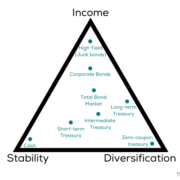
So, you lost money on bonds. The first question to ask yourself is – “Why did I decide that bonds belong in my portfolio in the first place?”
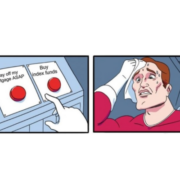
You’ve got extra cash! Maybe it’s from a raise, a bonus, or cutting expenses. Now, you want to improve your financial fitness but aren’t sure whether you should aggressively pay down debt or invest it.

Unless you’ve been living under a rock for the last year, you’ve probably heard of I bonds.
What are they? Are I Bonds a good investment? Should you invest in I Bonds now, or are you late to the party?
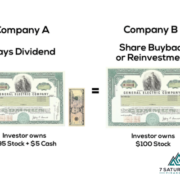
Although dividend investing is popular among investors, that focus can be misguided. It should be considered more of a “feel good” strategy than a good strategy. In this post, I’ll explain why dividends are irrelevant.