
The Old Software Running Your Financial Life
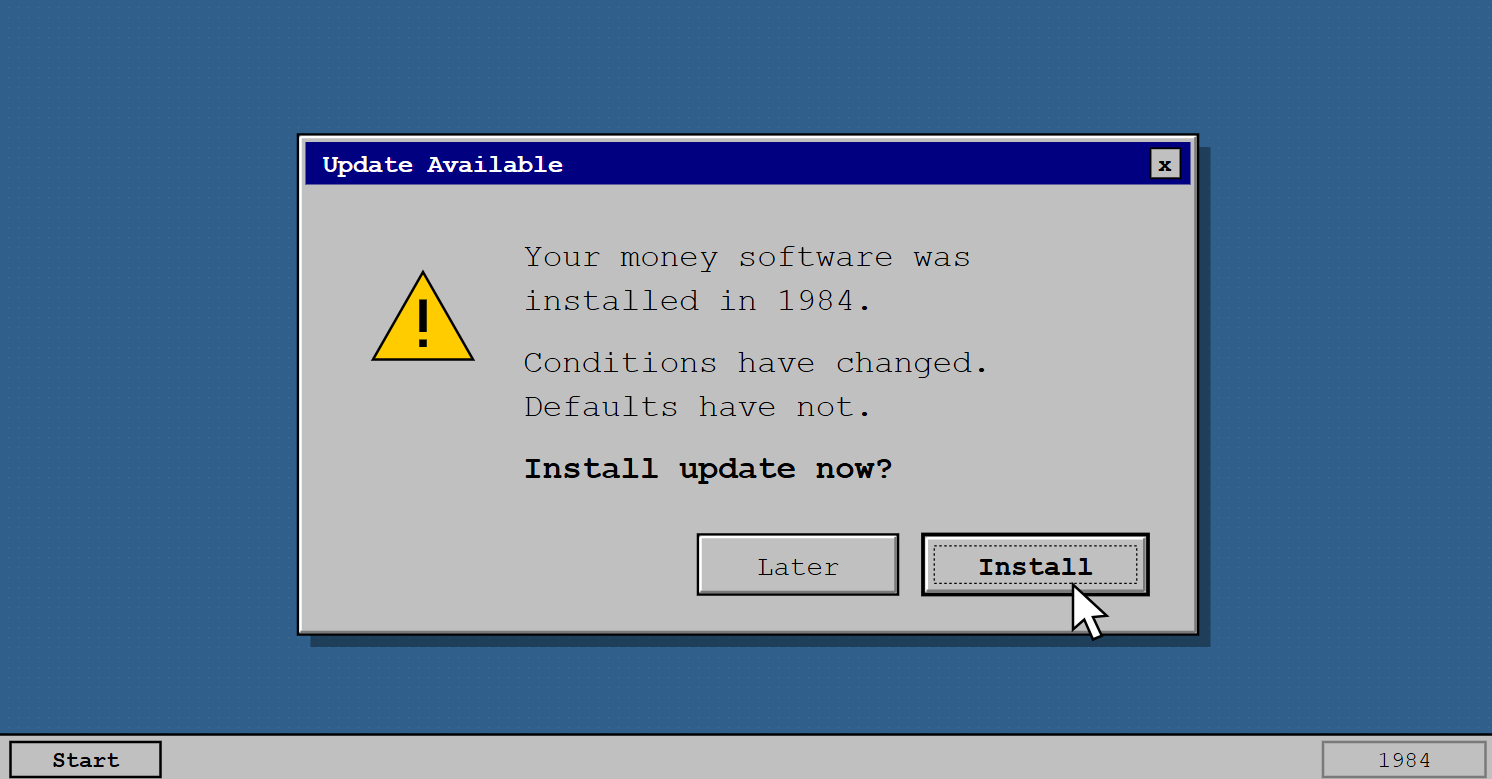
My family didn’t have a lot of margin. We clipped coupons, drove cars well past their expiration date, and vacations were reserved for special occasions. I never felt deprived. My parents were smart, intentional people. But the unspoken rules around money were clear and firm, and they kept our family on solid ground.
That frugality served a real purpose. It was the right operating system for the right moment.
But here’s what I’ve come to realize, both in my own life and in working with clients approaching or already in retirement: that operating system rarely gets updated.
For many of us, the money scripts we developed in childhood or early adulthood are still running in the background, unquestioned, decades later. They were installed during a time when they made perfect sense. But the conditions have changed.
Your income has changed.
Your net worth has changed.
Your remaining time has changed.
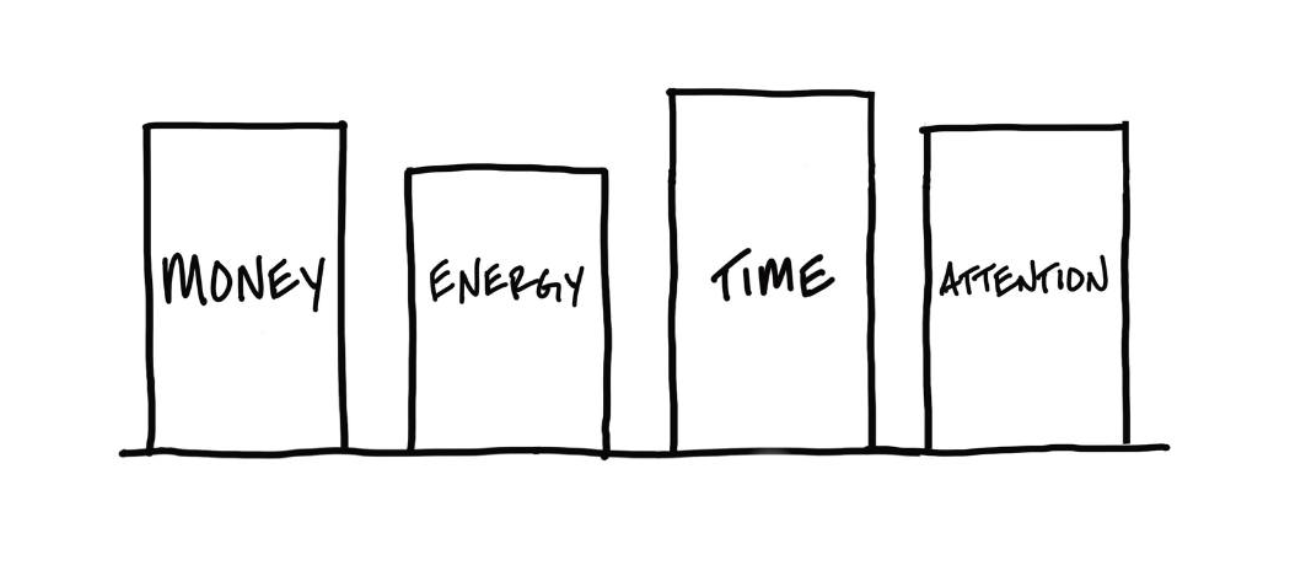
Sketch by Carl Richards. Money is usually the resource you have the most of. Spend it to get more of the ones you’re short on.
For most of our clients, money stopped being the constraint years ago.
And yet the defaults persist.
I see this constantly in my work as a financial planner. A couple with $4 million in investable assets, agonizing over whether to spend $200 on a nice dinner. A retiree with a fully funded plan who still buys the cheapest version of everything, not out of preference, but out of a deep, unexamined reflex. The math says they can afford it. The spreadsheet says they’re fine. But the old software says no.
That software was written to protect them from a risk that no longer exists. It did its job. Now it’s just running in the background, blocking the very things the savings were for.
One thing before we start – a plan needs to come first. It’s the prerequisite that tells you what you can afford to change. Without it, everything below is guessing.
For the sake of argument, let’s assume you have a retirement plan and it’s in good shape.
So how do you start rewriting the code?
Three steps have been helpful, for me personally and for the clients we work with.
1. Audit Your Past Spending for Outsized Returns
Pull up your credit card statements, your Amazon order history, or (my personal favorite) your photo library from the past year.
Look for what was money well spent – the things that brought disproportionate joy, health, connection, or time back into your life.
Then look for the opposite.
Where was the juice not worth the squeeze? Where did you spend out of habit or obligation rather than intentionality? Those are candidates for trimming, so you can redirect toward higher-value uses.
2. Find Your Levers
If you’ve spent decades optimizing for frugality, these questions are designed to stretch you in the other direction. Not to be reckless, but to challenge the default.
What purchases of $100 or less have most positively impacted your life in the last year?
Do they cluster in particular areas? For most people, the answers land in a few buckets: health, sleep, experiences, and gifts for people or organizations they love.
Now, what would it look like to invest more aggressively in those areas?
What if you spent $1,000 per year?
$10,000?
$100,000?
I know that might sound absurd. That’s the point. Personal finance expert Ramit Sethi calls this “pulling financial levers.” His recommendation: if something is truly important to you and affects everything else in your life, ask yourself what spending 10x more on it would look like. Even 100x. If you can afford it, how could you test it for a short time to gauge the results?
Questions like these are meant to overwrite the old code. The default settings from decades ago can’t survive them. That’s the point. You have to delete the artificial constraints to realize you had the ability to renegotiate your reality all along.
It just takes practice.
3. Run a Test
One of our clients was turning 70 and wanted to take his entire family to Hawaii for a week. Kids, grandkids, the whole crew. When we ran the numbers, the trip barely moved the needle on his retirement plan.
But it moved the needle on satisfaction in a way nothing else could have. A week of meals together, his grandkids on the beach, everyone under one roof. He told me afterward it was the best money he’d ever spent. That’s what pulling the right financial lever looks like.
The test doesn’t have to be that big. In my own life, I checked the numbers, combined my answers to the questions above, and decided to book monthly massages. It touched on health, wellness, and meaningful spending all at once. My nagging aches and problem areas improved significantly. After a short trial, the results were so clear that I committed to continuing it for at least the next year.
Pick one lever. Confirm the plan can carry it. Fund it for 90 days. See what happens.
A Few More Questions Worth Sitting With
What indulgences were worth it, and what did they have in common?
What indulgences were not worth it, and what did they have in common?
Where can you spend money to create frequent, small moments of joy? Where can you spend money to reclaim time?
A couple of quick examples:
- Small upgrades. Make a list of things you do daily or weekly. For an extra $100 per month, you could have the best toothbrush, the best eye mask, the best coffee.
- Buying time. Wash-and-fold laundry. A house cleaner. Someone to detail your car twice a month.
Write down at least 20 ideas. Include the ridiculous ones. Edit later.
The little things often end up being the big things. And sometimes the most important financial decision you can make is to stop optimizing for savings and start optimizing for life.
About the author: Allen Mueller, CFA, CFP®, is an “engineer turned finance nerd” and founder of 7 Saturdays Financial, a wealth management firm based in Dallas, Texas.
The core focus of 7 Saturdays Financial is helping high performers retire with confidence and make the most of their 7 Saturdays a week.
If you’re interested in seeing if it’s a good fit to work together, the first step is to schedule a complimentary intro call.
